Applications
When to write a cover letter (and when to skip it)
When is a cover letter worth writing? The four times it earns its place, when to skip it, and what to do with the hour instead: reach the hiring manager.
Free articles on how experienced professionals actually get hired.
 What experienced job seekers actually want (and it isn’t another tool)
 Read this firstThe modern job search: 29 things it takes now (most people do 3)
 Read this secondWhat is the hidden job market? Why the side door works
 Read this thirdHow to get a job through networking: the Off-Market Method
 Job search over 50: how to get past ageism and the overqualified label
 LinkedIn profile tips for job seekers, section by section
Subscribe to Stop Applying, Get Hired
Free, every Tuesday, from Grant. Plus my free guide straight away.
You're almost in. Check your inbox and click the link to confirm. As a thank-you, the free mini guide to Stop Applying, Start Getting Hired comes straight after.
When is a cover letter worth writing? The four times it earns its place, when to skip it, and what to do with the hour instead: reach the hiring manager.
Applied for 130 roles and heard nothing? You’re not doing anything wrong. The job search changed. Here are the 29 things it takes now.
There's no fixed number of years. How far back your resume should go, what to do with older roles, and whether to leave graduation dates off.
Edition 2 of Stop Applying, Get Hired: why an experienced job search loses track, and the one list and three messages that get you back in control.
Recruiters are binning AI resumes that sound like everyone else's. What gets yours rejected, what's fine, and the one line AI should never cross.
Edition 1 of Stop Applying, Get Hired: why applying cold keeps going quiet, why the side door works, and the two messages to send this week.
What experienced job seekers ask for: not another tool, but to know what to do next. The twelve things they want, in their own words, and why.
How to explain a gap in your resume: when to name it, the one line to write, what to say about redundancy, health or caring, and showing you're current.
What to write when you message a recruiter on LinkedIn: who to contact, connect or InMail, a first message that gets read, and when to follow up.
Job search over 50: where age bias bites, how to show 25 years without dating yourself, and what to say when you're told you're overqualified.
How to find the hiring manager for a job: the clues in the ad, where to look on LinkedIn, who to ask when you're stuck, and what to do with the name.
How senior roles are filled when they are never advertised: how retained executive search works, how to get on a consultant's radar, and your network.
What to write when you follow up with a hiring manager: when to send it, LinkedIn or email, a message that adds something, and when to stop.
A good recruiter is worth working with. How recruiters work, what they need from you, and how to be the candidate they are proud to put forward.
A month out of work costs more than a month of pay. What a long job search really costs in money, confidence and your story, and what actually shortens it.
Outplacement support is worth using fully. What it usually includes, how long it lasts against a job search, and what to do between sessions and after.
A professionally written resume is worth it. What a resume writer gives you, why a great resume can still go quiet, and what turns it into interviews.
A job search runs on a lag: messages this week become interviews in six to ten. How long it really takes, what two weeks of delay costs, and how to start.
How many jobs should you apply for each week? What the data says about volume and interview rates, and a weekly number you can keep up for months.
If your job search is not working, you may be waiting to change it. Why most people wait until month four, what those months cost, and the rule that helps.
Searching while you still have a job is the strongest position there is. How to job hunt while employed and stay visible without signalling you're leaving.
How to ask for a job referral without it being awkward: who to ask, what to write, how to give them an easy out, and what to do after they say yes.
ChatGPT is a good writing tool for a job search. Why it will polish your resume forever without saying the resume was not the problem, and what it misses.
How to organise a job search with no manager, deadlines or queue: why it is so tiring, what a job search day should contain, and how nobody gets forgotten.
Not getting interviews? The four usual causes, from a resume that misses the first seconds to applying cold, and how to tell which one is yours.
A good career coach is worth it. What a coach gives you, what happens between sessions, and what to run alongside so the plan turns into results.
A brag document is a running list of your wins with real numbers, kept as they happen, ready for your resume, LinkedIn and interviews. How to keep one.
Find your content pillars so people remember you for something. What to post on LinkedIn while job hunting, how specific to be, and how to post quietly.
Why are you leaving, a time you failed, a gap in your resume, where you want to be: four questions almost every interview asks, and how to answer them.
Being good at your job is invisible until someone has a reason to look. How to get noticed at work and build visibility this week, without self-promotion.
How to answer 'tell me about yourself' in an interview: a four-part career story that controls the narrative from the first minute, in under three minutes.
A finished LinkedIn profile can still get no interviews. The signal problem: what a visitor decides in the first seconds, and what a working profile does.
LinkedIn profile tips for job seekers, section by section: headline, About, experience, skills and the rest, and what each one has to do for a recruiter.
LinkedIn allows 220 characters for a headline, but only the start shows in most places. How long your headline should be, what goes first, and what to cut.
How to tailor your resume to a job description without rewriting it: three moves that make one resume work for many roles, and keep every fact true.
A cover letter is a business case, not a summary of your resume. How experienced professionals write one, with the four-paragraph structure that works.
Roughly one in five job ads have no active hiring behind them, and 3 in 10 jobs close with nobody hired. How to spot a ghost job, and the fix either way.
Can you get it, are you strong for it, and is it right for you? Three questions to decide whether to apply for a job before you spend an evening on it.
The hidden job market is hiring that happens through people, not the apply button. Why mass applying keeps failing, and how the side door works better.
On the facts, yes: carry your roles across word for word so they never disagree. Then write the headline, About and skills for people who look you up.
In Ladders' eye-tracking study, a first pass of a resume took 7.4 seconds. What the top third has to do, with the headline, summary and bullet formulas.
Resume achievement examples and the one formula behind them: a strong verb, what you did, how you did it, and a measurable result. Turn duties into wins.
How to reconnect with an old colleague after years of silence: what to say to each kind of old contact, and how to tell your network you're looking.
Almost every recruiter Jobscan surveyed filters candidates in their ATS. Five formatting rules that make your resume ATS-friendly and keep it readable.
A study of 20 million people found acquaintances help people change jobs more than close friends. What that means for your job search, and how to use it.
Four before-and-after LinkedIn summary examples across sales, finance, operations and technology, and why the first two lines of your About matter most.
How often to post on LinkedIn when you want to be remembered. What a Buffer analysis of over two million posts found, and why steady beats one great post.
How to prepare for a job interview: what to research, which questions to get ready for, how to practise your answers out loud, and what to ask at the end.
How long a resume should be depends on career stage: one page early on, one to two when established, two to three for senior and leadership roles.
How to get a job through networking, in four moves: Be Ready, Be Connected, Be Seen, Get Hired. The method behind FutureDay and the book, in plain English.
Every job but one came through someone he knew. Grant Kratz on the method that works, why it falls apart, and the app he built to hold it together.
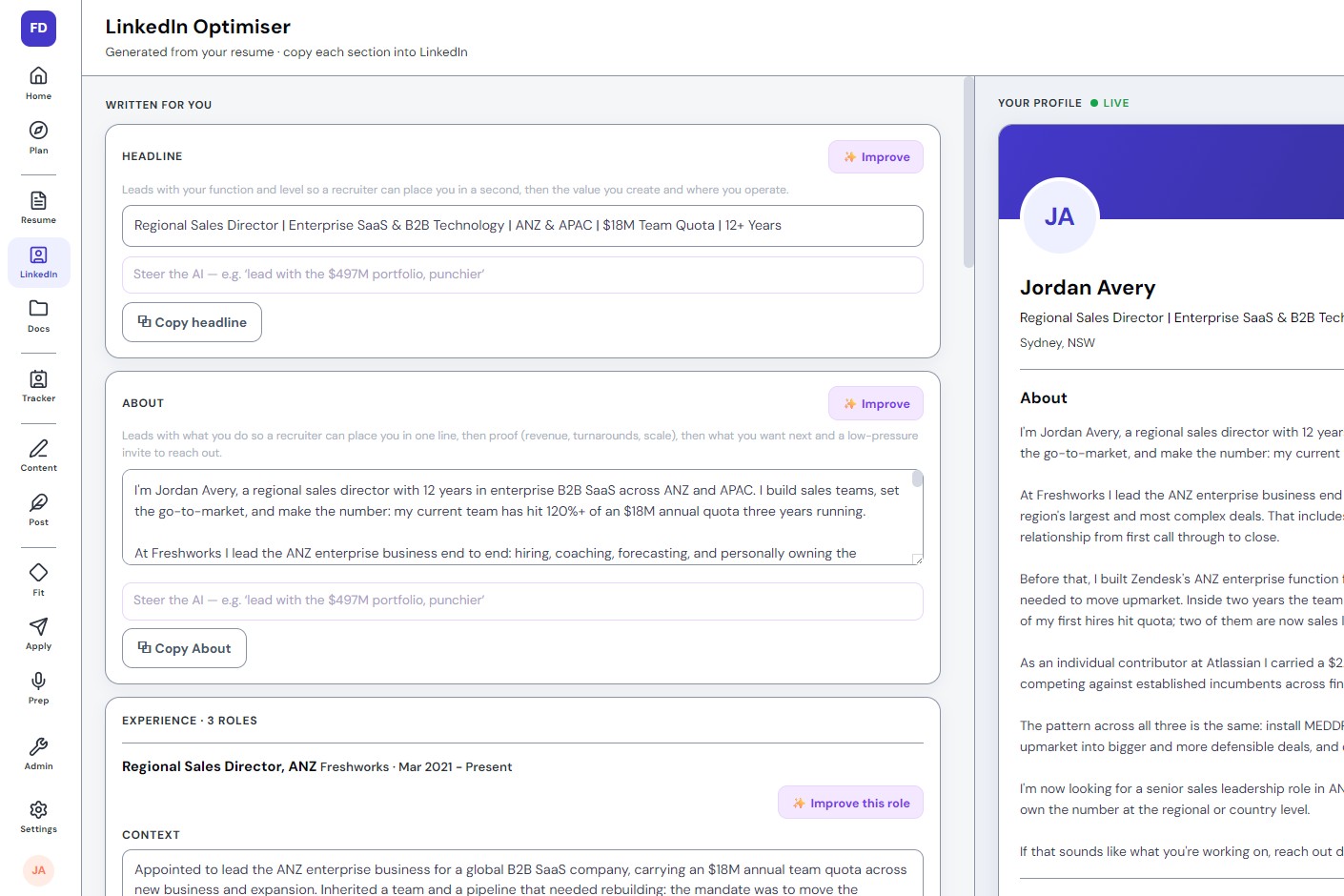
How FutureDay's LinkedIn Optimiser turns your resume into a LinkedIn profile: headline, About and experience for recruiters, with your facts intact.
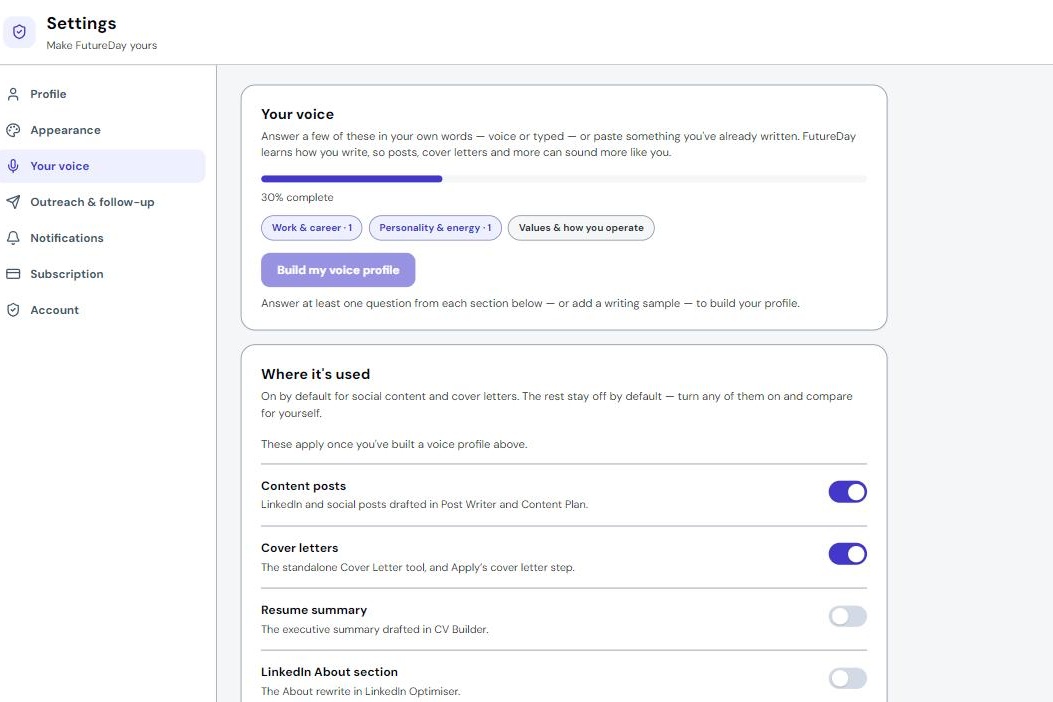
How FutureDay builds a voice profile from your own answers and writing, drafts posts and cover letters that sound like you, and checks posts for AI tells.
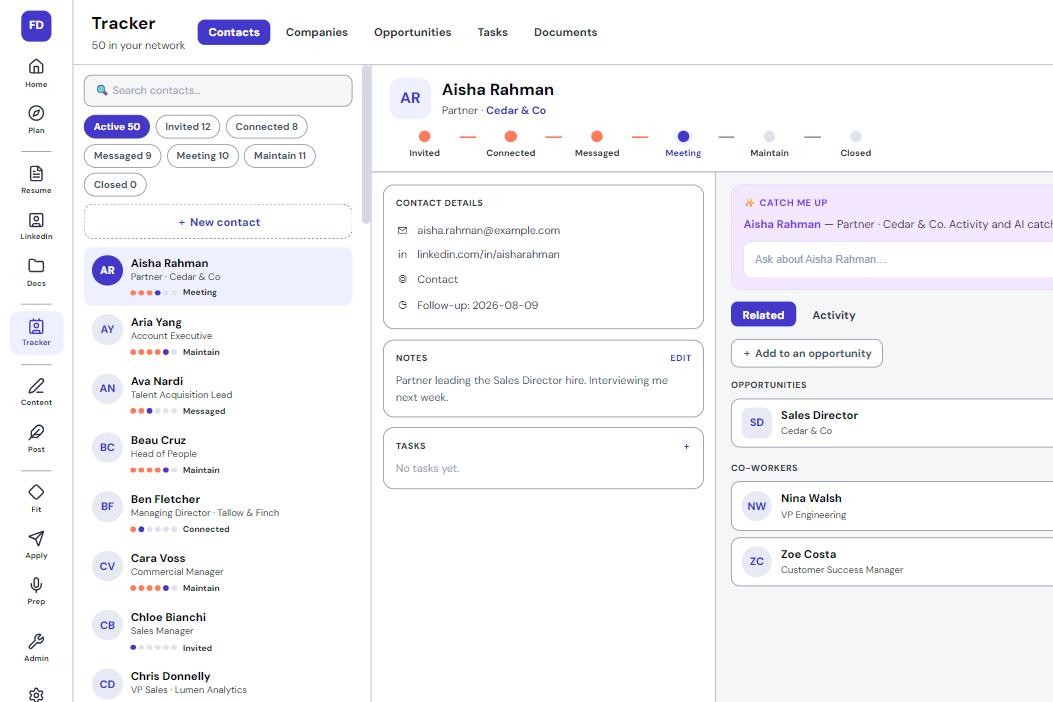
How FutureDay's Contacts, Target Companies and Job Tracker keep your whole job search in one place: who you know, where you want to work, and every role.
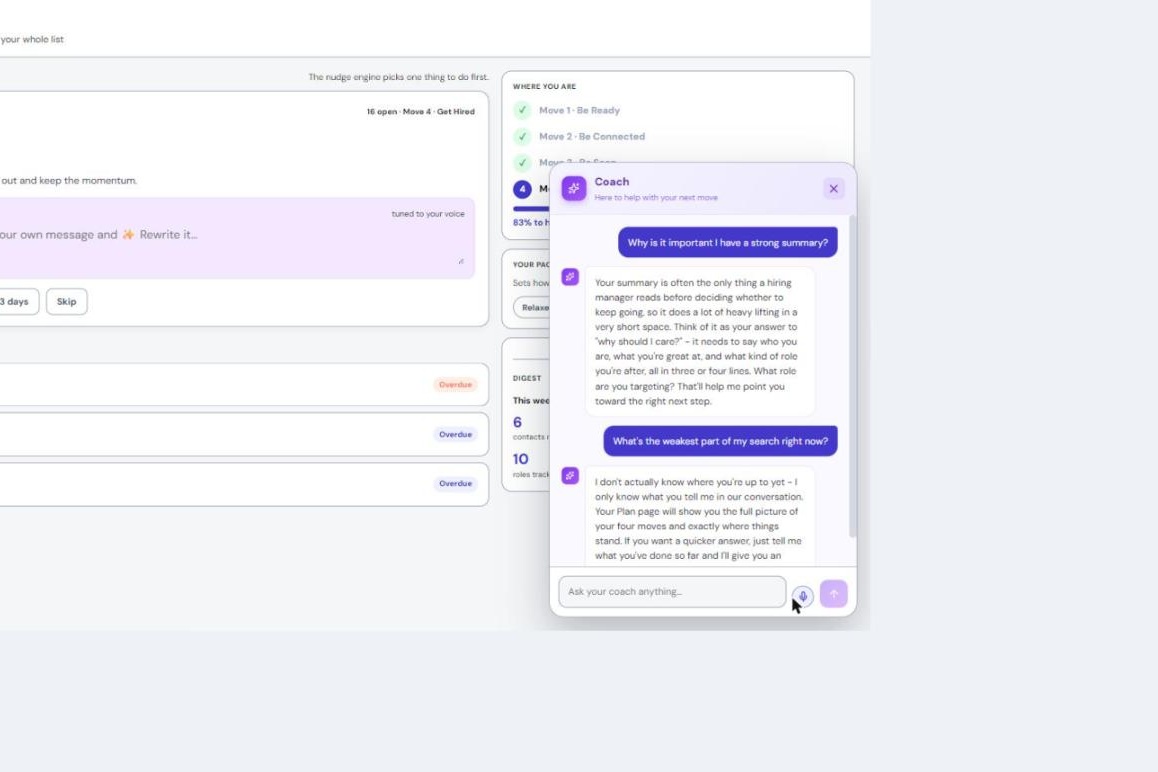
Ask FutureDay is an AI job search assistant. It sits on every screen, knows where your search is up to and what you have open, and asks, not guesses.
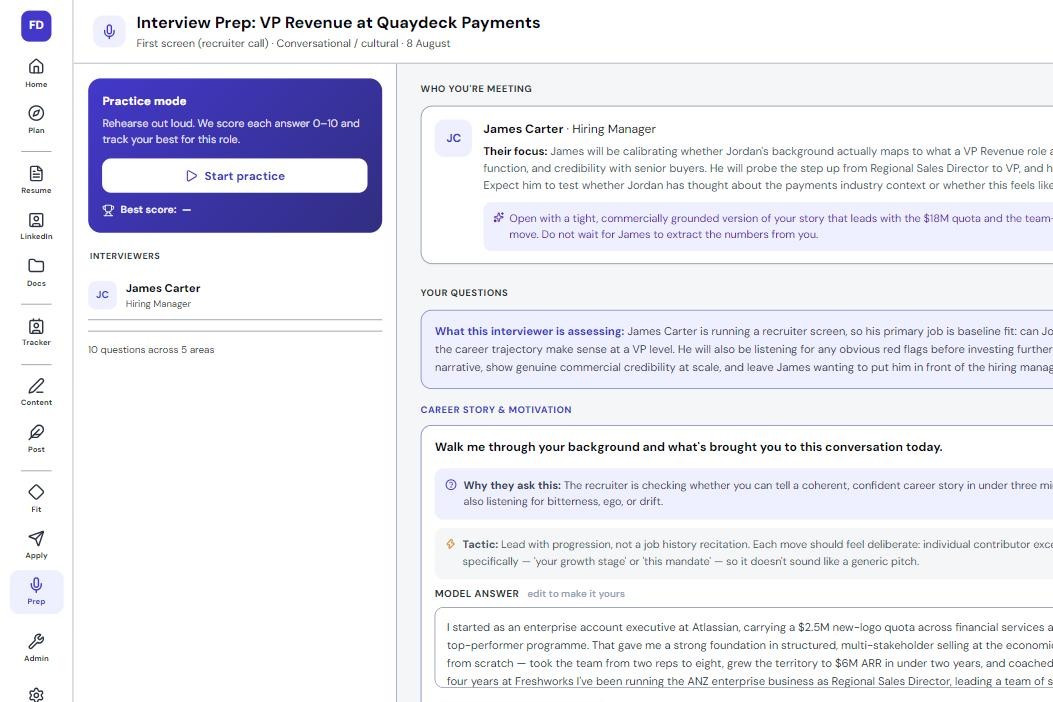
How FutureDay Interview Prep checks practice answers: the situation, what you did, a number that shows the result, and why it worked. Checks, not a score.
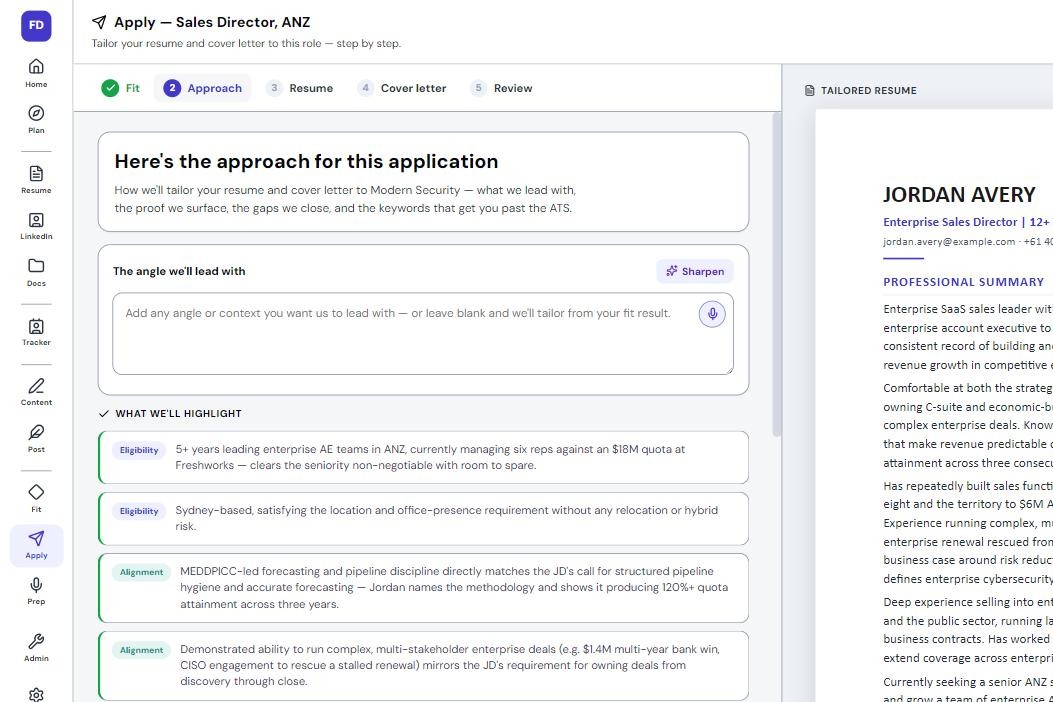
FutureDay's Tailored Resume puts your facts in the job description's words. It never adds a number, title or tool you did not have, and never moves a line.
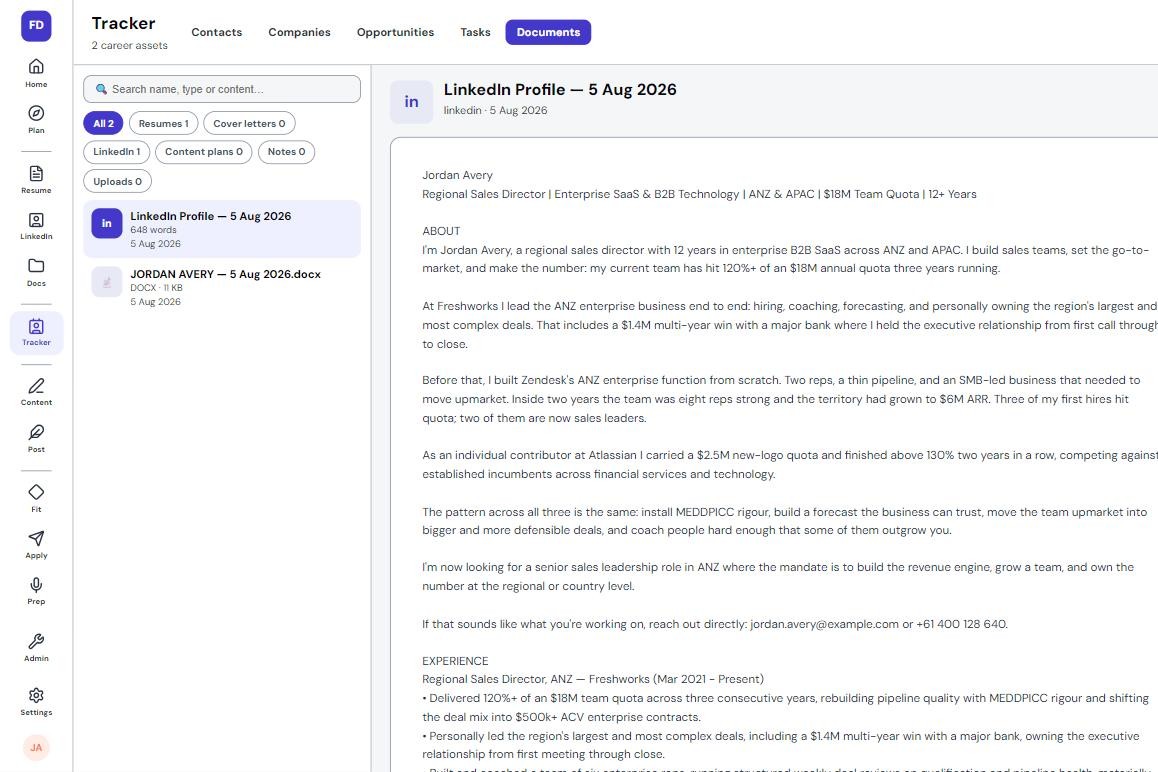
FutureDay Documents keeps every resume and cover letter in one place, listed under the job it was written for, so you can find and reuse the right one.
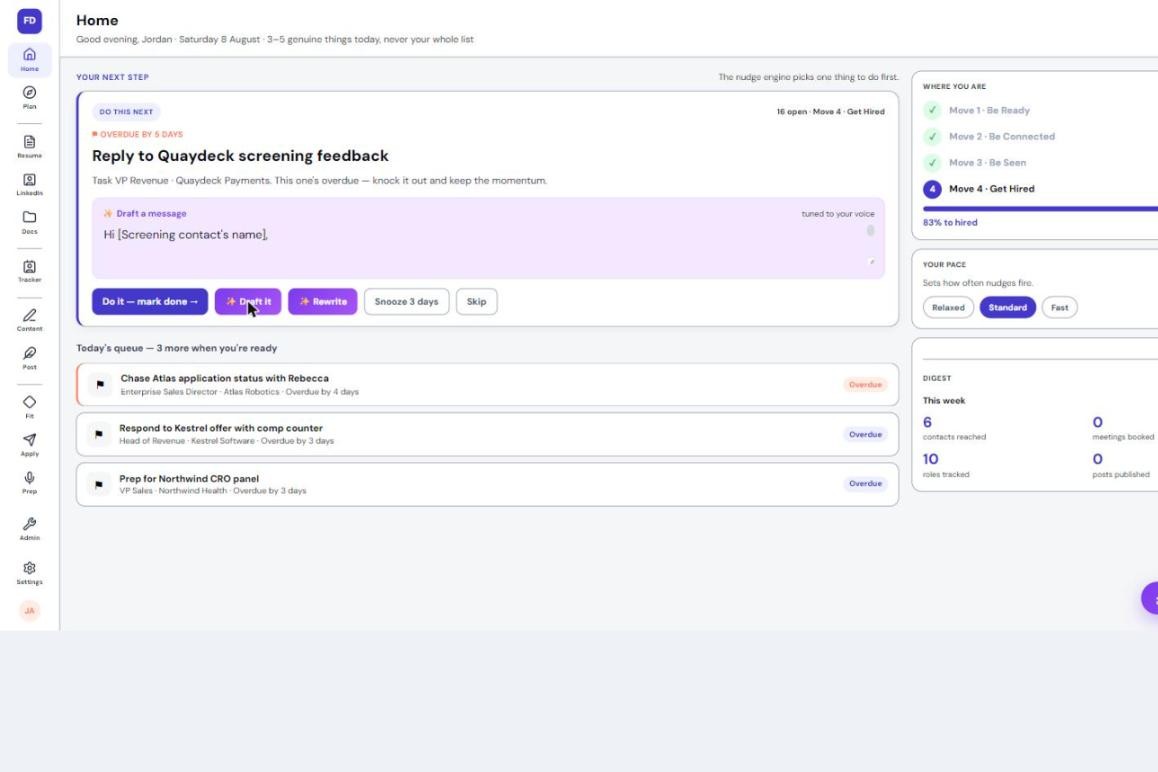
What a daily job search routine should look like, and how FutureDay Home puts your next follow-ups in front of you every morning so nothing goes quiet.
Upload your resume or start from scratch. FutureDay's Resume Builder checks it against a written standard, flags weak lines and offers better versions.
How FutureDay's Job Fit Check reads a job description against your resume before you apply: what you have proved, what is missing, and if it is worth it.
How FutureDay's Posting Plan, Posting Calendar and Post Writer work together, so your LinkedIn posts run on a plan while you job hunt, in your own voice.
Nothing here matches. Try another topic or clear the search.
The free 21-page mini guide to “Stop Applying, Start Getting Hired”, the book behind FutureDay: how to get hired through the people you know, not job boards.
Get the free guide → 21 pages, a 15-minute read