
A job search that runs through people works on a lag. Messages you send this week turn into conversations in two or three weeks, and into interviews six to ten weeks out. Applying feels like progress today. But the lag is why the week you start matters more than the hours: every week you wait is added to the end.
If you want to know when a job search will end, look at when the first message went out, not the first application. Applications feel like the start of a search, but conversations are what end one, and conversations take weeks to arrive. That gap decides how many months of pay a search costs you. Most people only discover it once the months are already gone.
How long does it take to find a job?
Longer than most people plan for. The US Bureau of Labor Statistics put the average stretch of unemployment at 26.3 weeks in August 2026, roughly six months. More than one in four unemployed people, 27 percent, had been looking for longer than that.
The Bureau's median was far shorter, about 11 weeks. That gap is the interesting part. A lot of searches end reasonably quickly, and a long tail runs on and on. What separates the two is rarely talent or experience. Far more often it is which door the person used, and when they started using it.
Why does applying feel productive when it is not?
Because applying pays today. You find a role, tailor the resume, press submit, and a confirmation email arrives within the minute. Something happened. You can count it, and at the end of the evening you have a number to show for it.
The trouble is what the number is made of. Ashby found that 40 percent of referred applicants got an interview, against 3 percent of people who applied cold. The activity that feels fastest has the worst odds per application, and forty careful applications is a working month of evenings. It is easy to spend a whole quarter being busy at the front door and still have nothing booked.
How long does the people route take?
It runs in three stages, and each one waits on somebody else's calendar.
This week: you reach out. A handful of messages to people who already know you, and a few to the companies you have picked. Nothing comes back yet, and that silence is normal.
Weeks two and three: the replies start. A coffee gets booked for next Thursday. A former colleague passes your name to someone. You hear about a role that has not been advertised anywhere, or will not be for another month.
Weeks six to ten: it turns into interviews. The conversations you started in week one become the roles you are weighing up now.
Take Bill, from the book behind the Off-Market Method, “Stop Applying, Start Getting Hired”. He had spent months applying after a redundancy, with almost nothing back. What moved it was one conversation with a former colleague. It turned into an introduction, and six weeks later he had an offer for a role that was never advertised. Nothing about his resume changed in those six weeks. The clock only started when he sent the first message.
None of this can be hurried, because none of it is yours to hurry. People are busy. A name gets passed on when it comes up, not when you need it to. The role your contact mentions opens when the budget does.
What does a fortnight of putting it off really cost?
It does not cost you a slow start. It costs you two weeks at the finish.
The lag stays the same length whenever you begin. If a first message takes about six weeks to become an interview, starting two weeks late means interviews in week eight instead of week six. And nothing you do later buys that time back. You can send a hundred applications in a weekend. You cannot make ten people reply faster, and you cannot cram a network at the end of a search.
In money, the sum is simple: a month out of work costs a month's pay, and four months costs a third of a year's income. The pricing page sets out the same arithmetic as three ways the next six months can go. The part nobody puts on a spreadsheet is the extra weeks of the 6am maths and the question at dinner about how it is going.
The same arithmetic is the best argument for starting while you still have a job. If the lag is six to ten weeks either way, it is far better to run it while nothing depends on the answer.
What should the first week look like?
Smaller than you think. The first week is not about volume. It is about starting the clock.
Get your resume and LinkedIn to a standard a stranger could read. Do this in a day or two, not a month. They need to be good enough for the people you are about to contact to pass on. Polishing them for weeks is just another way of not starting.
Write down twenty people who already know your work. Former managers, colleagues, clients, people you studied with. Message five of them this week. A short note with a real reason to get in touch works better than a request.
Pick a handful of companies you would genuinely like to work for. Find one person inside each and start a conversation, not an application.
Keep applying where a role is a real fit. The front door still opens sometimes. It just cannot be the whole plan.
After that, it is steady rather than heavy. Around thirty minutes a day keeps every thread moving: a reply here, a follow-up there, one new person a day. What matters is that the first messages go out this week, because those are the ones that turn into interviews in week six.
Where FutureDay fits
FutureDay is built for the lag. Home puts the week's messages in front of you each morning. Contacts and the Job Tracker remember who you reached and when, and Home brings each person back when it is time to follow up. By week six, those interviews are already in motion.
A search that runs through people works on a lag: messages this week, conversations in two or three weeks, interviews six to ten weeks out.
Applying feels productive today, but in Ashby's data 40 percent of referred applicants got an interview, against 3 percent who applied cold.
Starting late does not slow the start. It adds the same weeks to the end, and applying in week eight cannot buy them back.
The first week is small: a resume ready to share, five messages to people who know you, and one conversation at each company you chose.
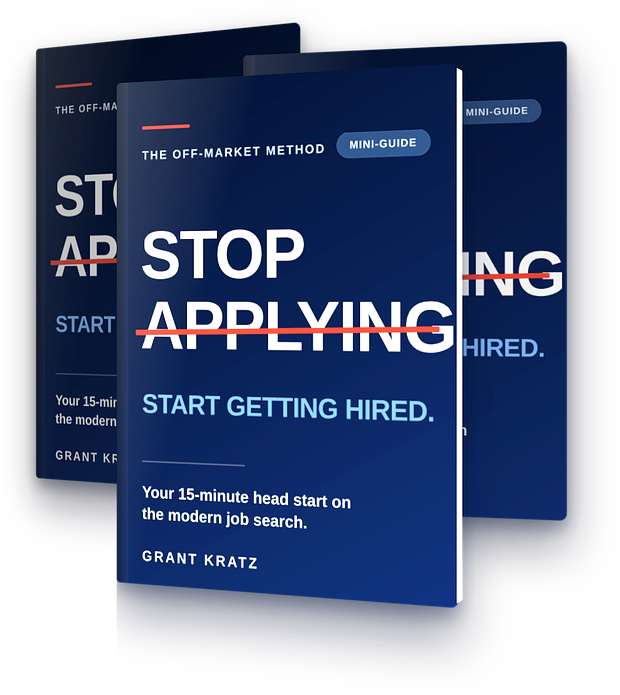 21 pages, a 15-minute read