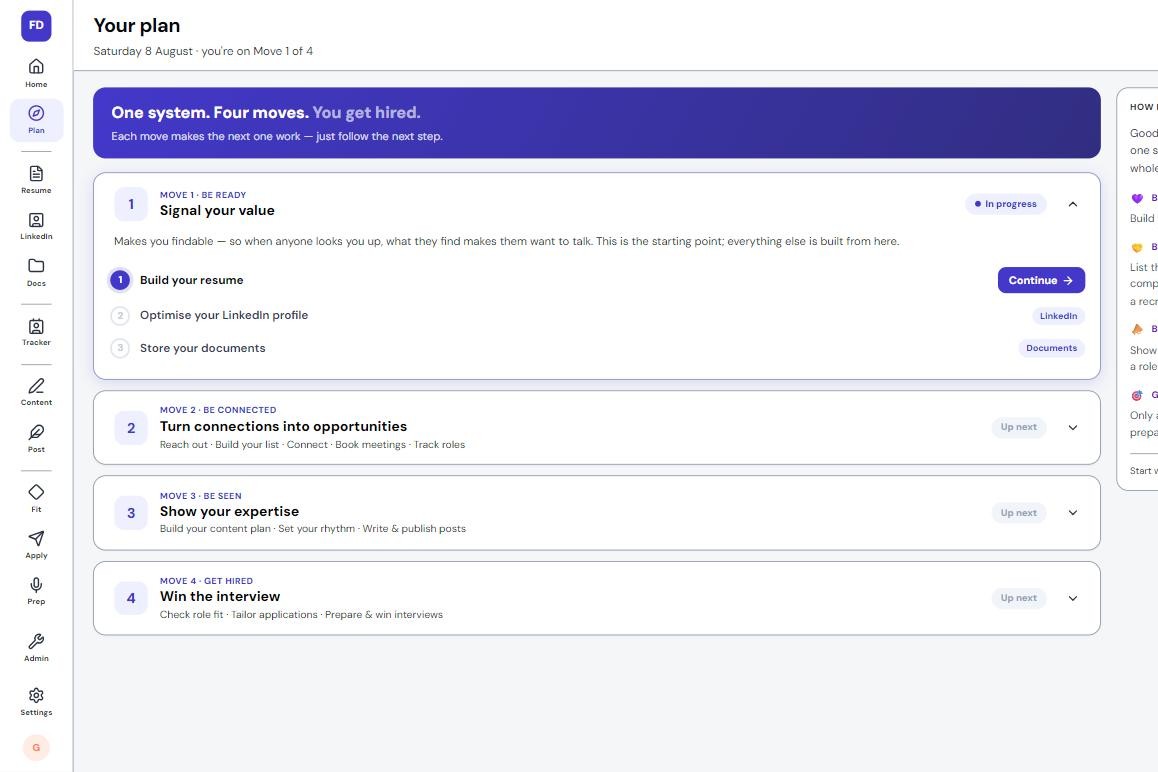
Be Ready, Be Connected, Be Seen, Get Hired: The Off-Market Method, Explained
How FutureDay's four moves, plus Stay Ready, turn a job search into a system instead of a guessing game.
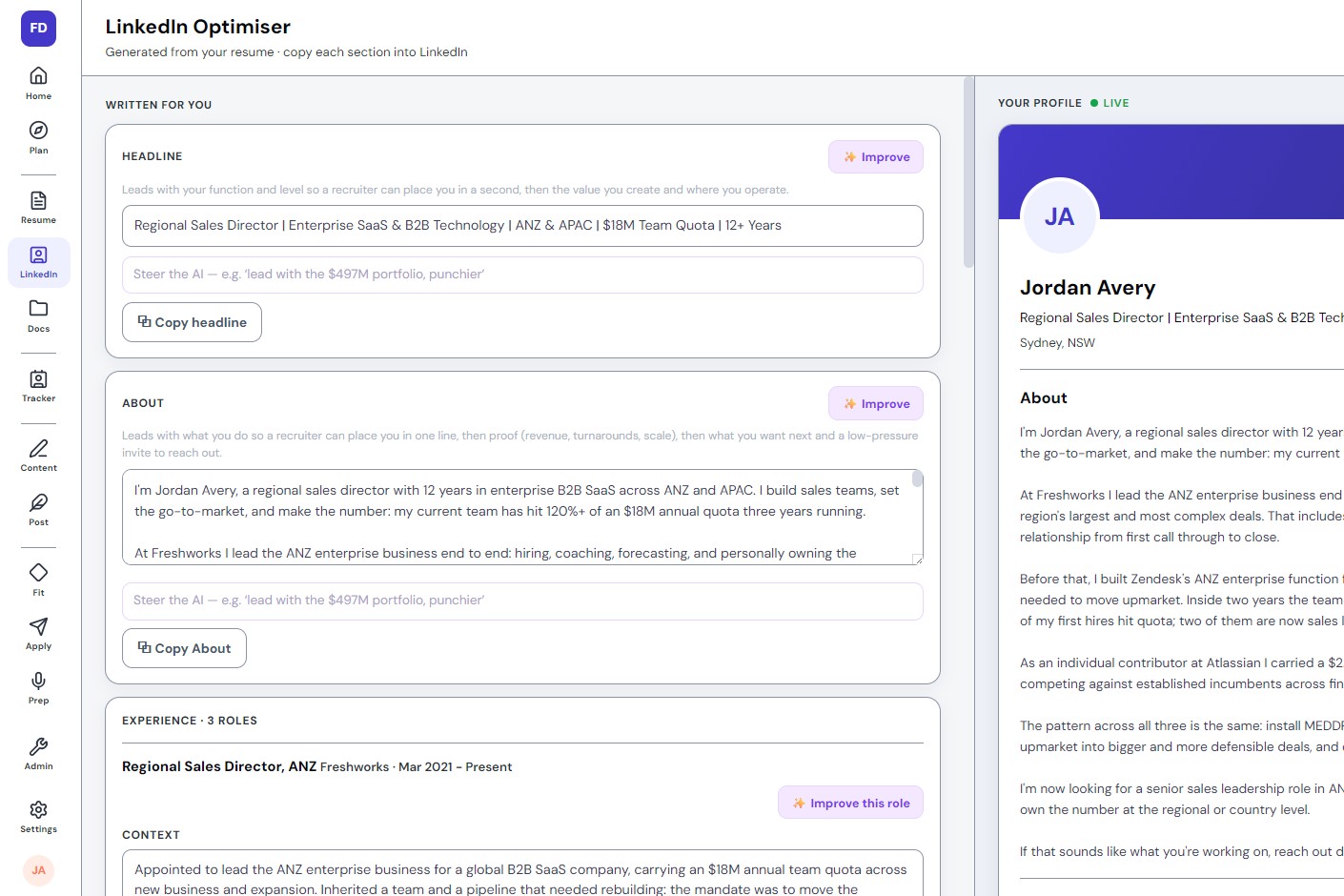
Inside FutureDay: How the LinkedIn Optimiser Works
One finished resume becomes a headline, About section, every role and a prioritised skills list, written for how LinkedIn is actually searched.

The achievements bank: the 5-minute habit that makes your whole job search easier
Most people try to remember a year of wins from memory right when they need them most. The achievements bank fixes that: a running list of wins captured with real numbers as they happen, ready to reuse across your resume, LinkedIn and interviews.

Find your 3 content pillars: what to post about so people remember you for something
Most feeds feel random because nobody's answered three questions first: what to be known for, who it's for, and what to keep returning to. Here's how to find yours.

The interview questions almost everyone gets, and almost no one prepares for
Why are you leaving, tell me about a time you failed, a gap in your resume, where you want to be in a few years. Four questions that come up in almost every interview.

Being good at your job is invisible until someone has a reason to look
Strong work doesn't get noticed automatically. Content is how you give the right people a reason to look before you ever need them to.
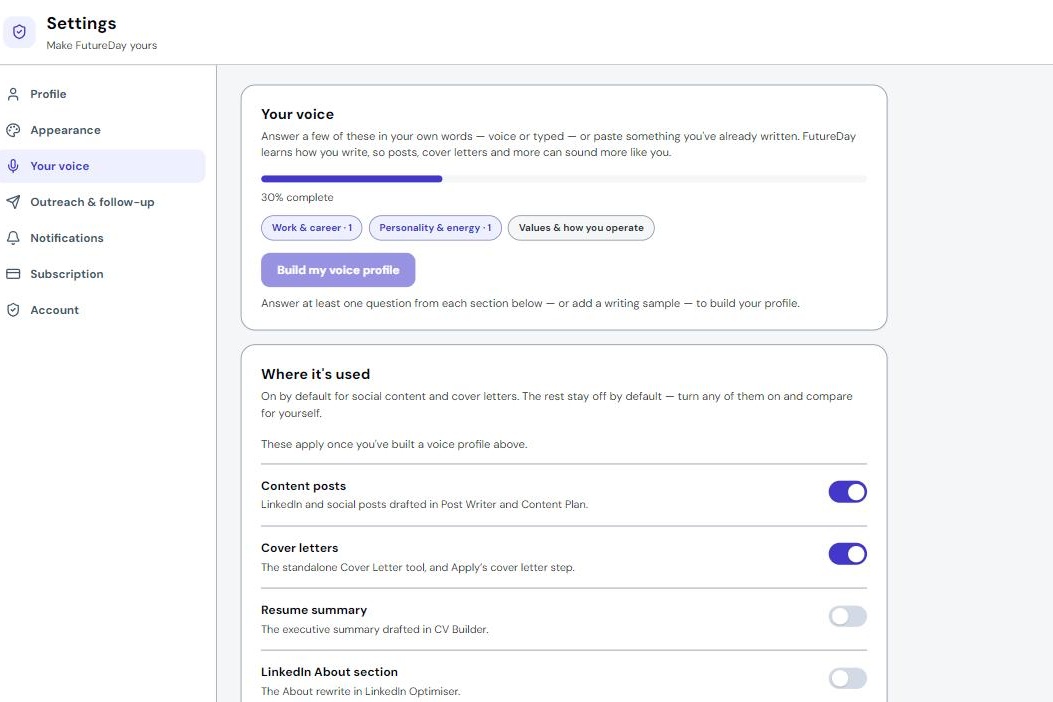
Inside FutureDay: Write Like You, Not Like a Robot, the Voice Profile Explained
Built from your own answers and writing, then checked by a separate AI-signal score, so cover letters and posts sound like you, not a chatbot.

Your career story in under 3 minutes: how to nail "tell me about yourself"
“Tell me about yourself” is asking for a structured career story, not a resume recap. The four-part answer that controls the narrative from the first minute.
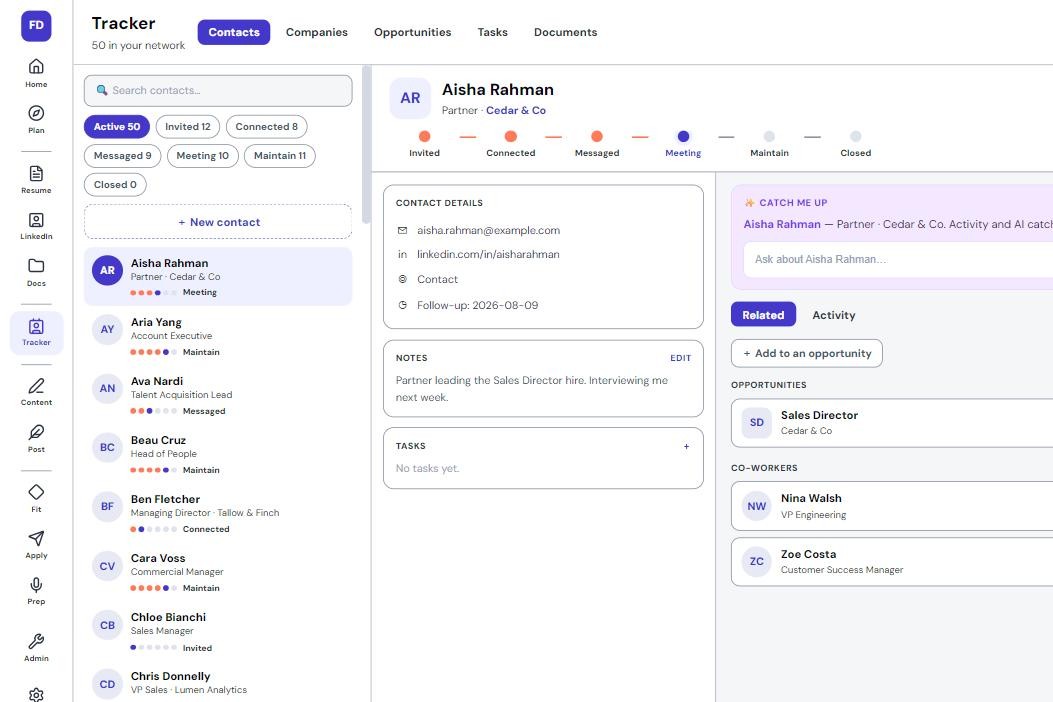
Inside FutureDay: The Pipeline, One CRM for Contacts, Companies, Opportunities and Tasks
Every contact, target company, live opportunity and follow-up task in one connected system, so nothing goes cold from silence.

The front door is broken: why mass-applying online is the worst use of your time right now
The ratio of hires to job postings has roughly halved since 2019, and the openings-to-hires gap has stayed elevated for years. What that means if you're still treating the apply button as the whole strategy.

Why a “finished” LinkedIn profile still isn't getting you interviews: the signal problem
A profile that isn't getting interviews is usually being found, not ignored. It's failing in the roughly eight seconds after someone lands on it, the signal problem, explained.

12 sections, one job: a job seeker's guide to every part of a LinkedIn profile
LinkedIn's All-Star badge checks completeness, not whether your profile works. A section-by-section guide to all twelve parts of a profile.

The 30-character rule: how long should your LinkedIn headline really be?
LinkedIn's technical headline limit is 220 characters, but only about 30 actually display before truncation. What those 30 characters should say, and what wastes them.
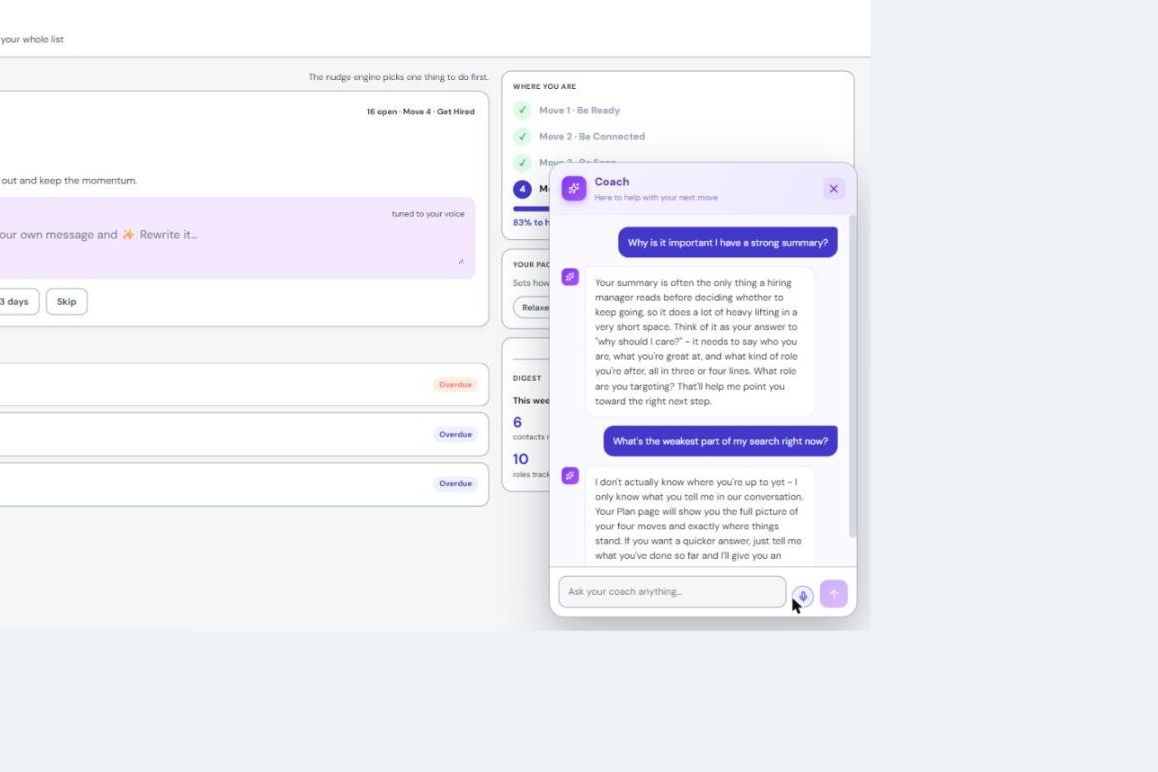
Inside FutureDay: Meet Your AI Coach, Your Next Move, Every Day
A weekly digest built entirely from your real activity, and a coach that tells you the truth when it doesn't know something yet.

Tailoring without rewriting: the three moves that make one resume work for many roles
Tailoring doesn't mean rewriting from scratch. Three deliberate moves, mirroring language, leading with relevant proof, and cutting what doesn't serve the role, turn one resume into many.
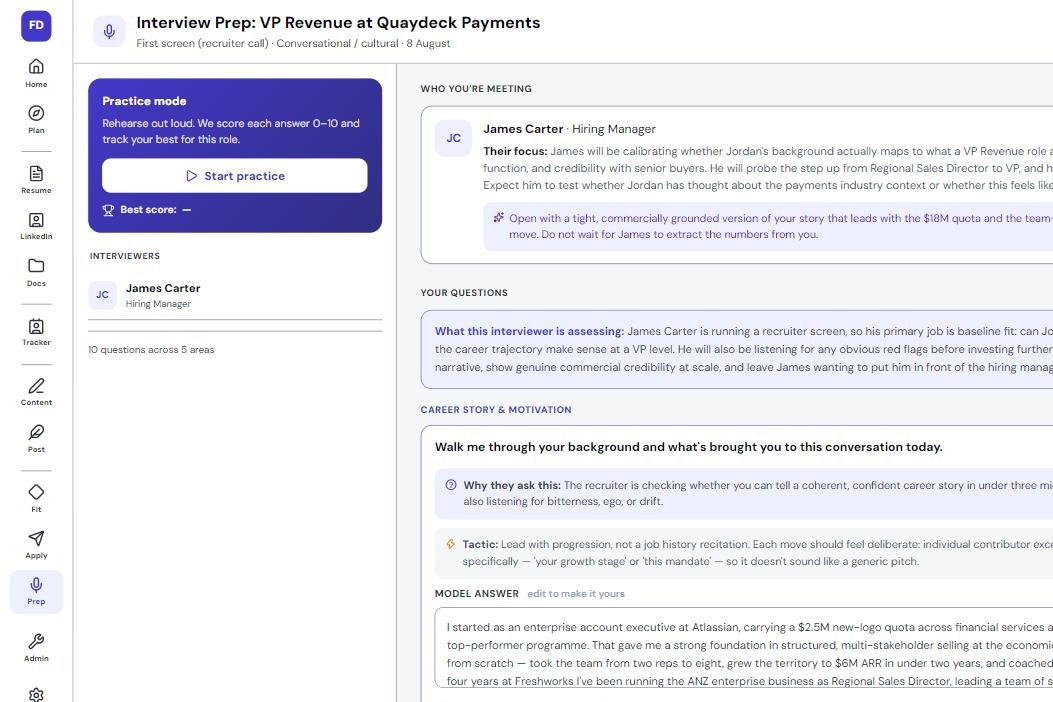
Inside FutureDay: How Interview Prep Scores Your Practice Answers
A full prep pack from one tracked application, interviewer focus, tailored questions, model answers and strategy, then a practice mode that scores your spoken or typed answers out of 100.

The five messages that reactivate your network (without feeling desperate)
Most people never formally tell their own network they're looking. The exact script, and why it works.

The cover letter, reframed: why it's a business case, not a summary
A cover letter isn't a summary of your resume. It's a short business case for why hiring you solves a problem the employer has. The four-paragraph structure that actually works.

1 in 5 job ads are ghosts. Here's how to spot them
Greenhouse data says a fifth of ads aren't real, and even the real ones convert to a hire half as often as they used to. The tells, the real cost, and the fix.

The three questions to answer before you apply anywhere
Tailoring forty applications properly costs a working month of hours. Three honest questions tell you which ones are worth it.

Two doors into every company: the hidden job market, explained simply
Every company has a public front door and a side door only people already inside know about. Why the front door keeps failing, and what the side door actually is.

LinkedIn profile vs resume: why they need different words for the same facts
A resume and a LinkedIn profile should state the same facts, but they're read by different people, at different moments, for different reasons. Copying one straight into the other is one of the most common mistakes, and it quietly weakens both.

Your resume's first page has one job: sell the interview
A recruiter gives your resume 7.4 seconds, and software decides whether they see it at all. The headline, summary and bullet formulas that do the work.

Your LinkedIn is your landing page. Most profiles read like an old resume
Found, believed, contacted: the three jobs of a profile, and how to rebuild every section so it converts.

Duties vs achievements: the one-line resume rewrite that changes everything
Most resume bullets describe what someone was responsible for instead of what they actually did. The fix is one formula, repeated on every line that matters: a strong verb, what you did, how you did it, and a measurable result.
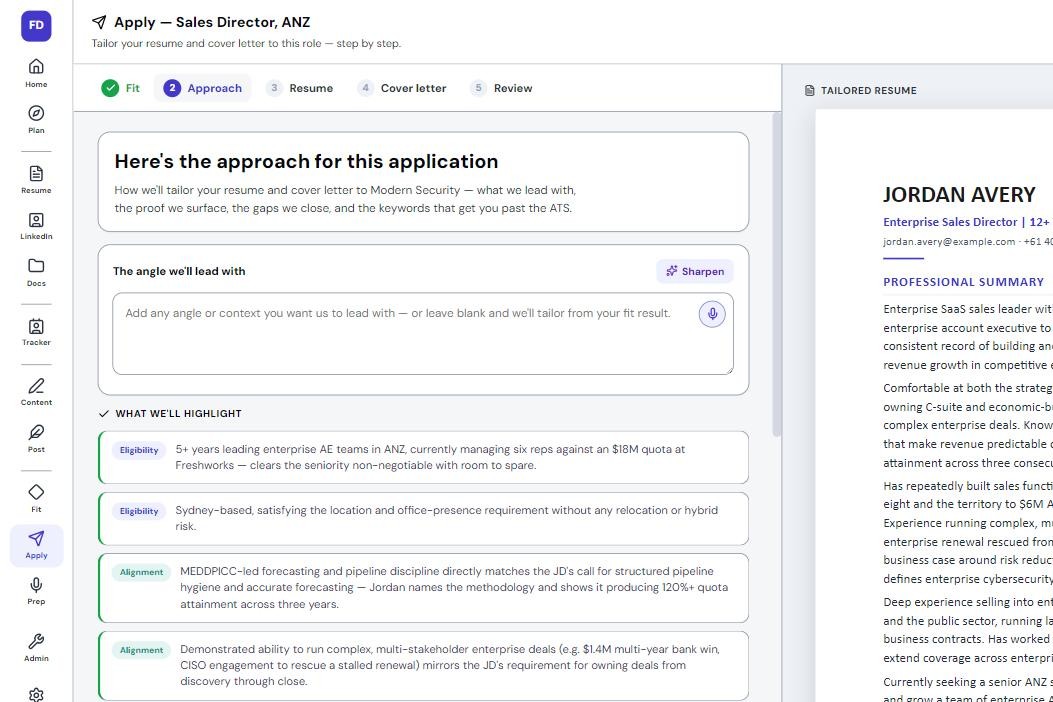
Inside FutureDay: The Tailored Resume, Built in Minutes
Every change tagged to the exact evidence behind it, ATS keywords you can see and toggle, and a full application, resume and cover letter both, in minutes instead of an evening.
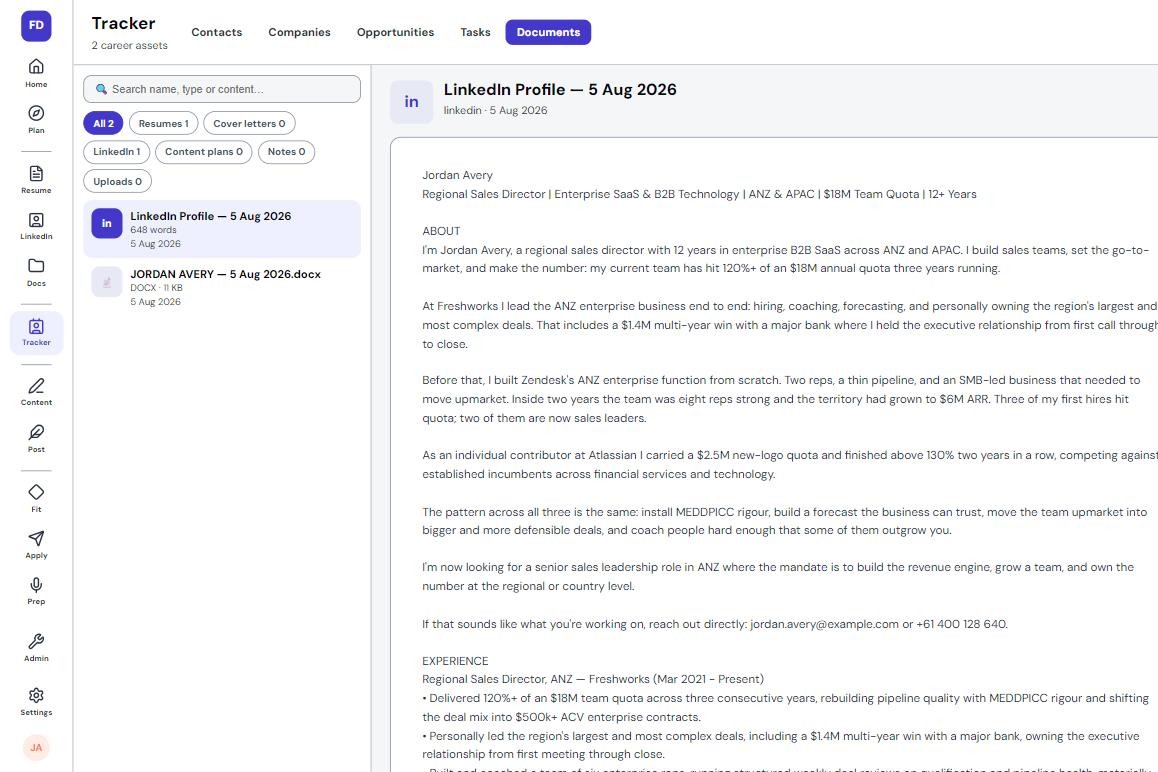
Inside FutureDay: Documents, Every Version in One Place
Every resume, LinkedIn profile and cover letter, saved automatically the moment you build it, one searchable library instead of scattered files.

How to message someone you haven't spoken to in years (and why they'll be glad you did)
Research on dormant ties found reconnecting after years of silence delivers help as useful as a brand-new contact, and the imagined awkwardness is always worse than the real thing.

How to beat the ATS: 5 formatting rules keeping strong candidates out of the pile
99.7% of recruiters use software to screen resumes before a human reads one. Five formatting rules that keep your resume readable to both.

The strength of weak ties: why acquaintances get you hired faster than best friends
A landmark study of 20 million people found loose acquaintances help people change jobs more than close friends do. The research, and how to actually reach out.

LinkedIn summary examples: before and after for four careers
A recruiter needs to place a candidate, role and level, within the first two lines of an About section. Four before-and-after examples across sales, finance, operations and technology.

What actually gets you remembered on LinkedIn: the mere-exposure effect, explained
Getting remembered on LinkedIn isn't about one post going viral. A Buffer analysis of over two million posts found a steady, moderate cadence beats posting daily for a week and quitting.

The 3 jobs your LinkedIn profile has to do (most profiles do none of them)
A LinkedIn profile isn't one thing, it's three separate assignments: get found, get believed, and demonstrate authority. Most profiles were built as a single static bio and are quietly failing at least one of the three.

Walk in prepared: the interview pack the other candidates won't have
Two jobs of preparation: controlling the narrative, and removing surprises. Here's how to do both before you walk in.

The one-page resume rule is dead: how long yours should actually be
The one-page rule came from paper resumes and print-era hiring. The real length depends on career stage, one page early on, up to two for senior and executive roles, condensing older history rather than deleting it.
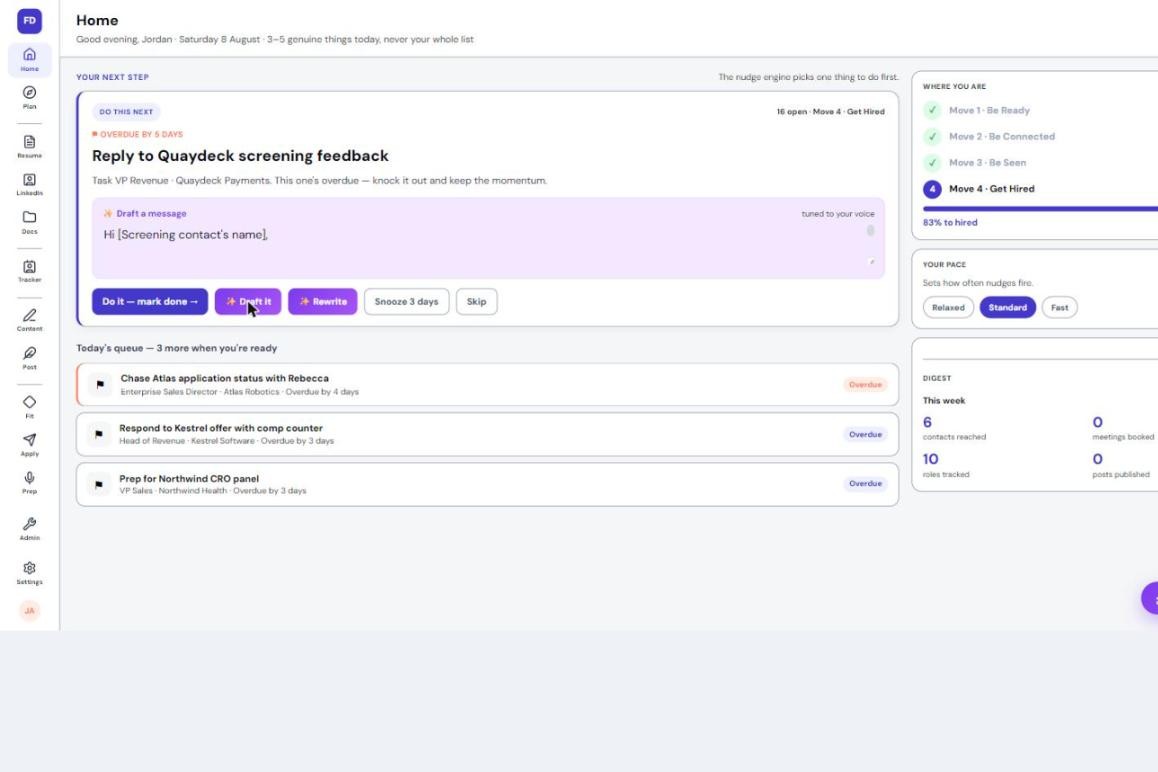
Inside FutureDay: Nudges, Why Every Opportunity Stays Warm, Automatically
One real follow-up at a time, drafted for you if you want it, then quiet again until the next one is genuinely due.
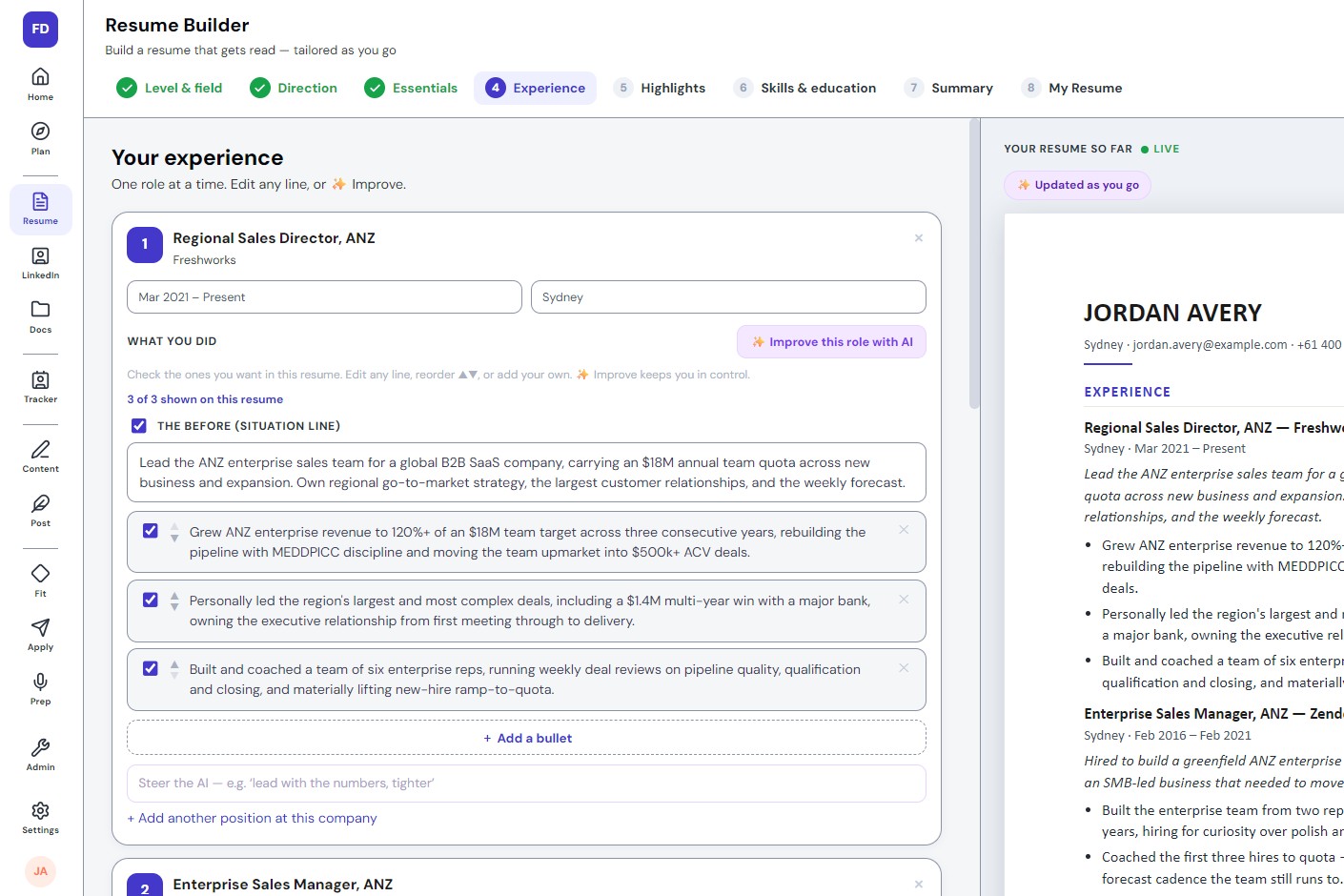
Inside FutureDay: How the Resume Builder Gets You Past the Software
A short, guided sequence that turns your work history into achievement-led bullets a recruiter, and the software before them, will actually read.
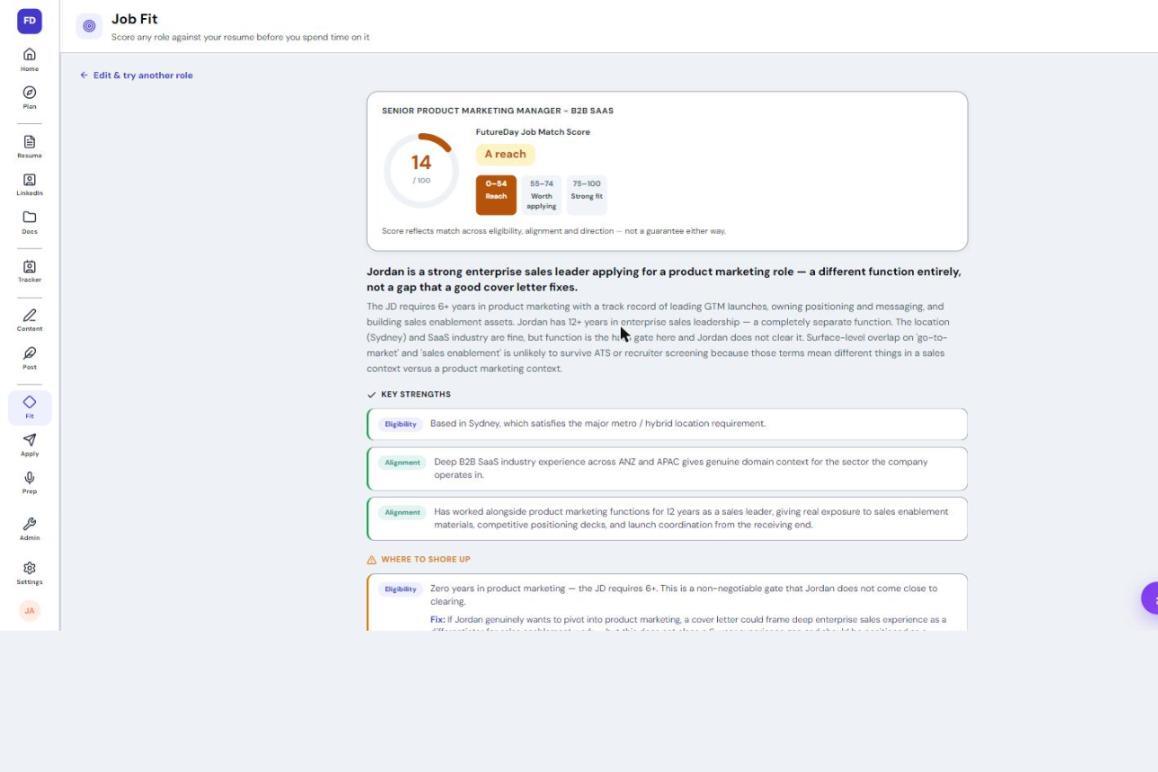
Inside FutureDay: How the Job Fit Checker Scores a Role Before You Apply
A score out of 100 across eligibility, alignment and direction, with a plain verdict, real strengths and exactly where you fall short, before you spend an evening tailoring.
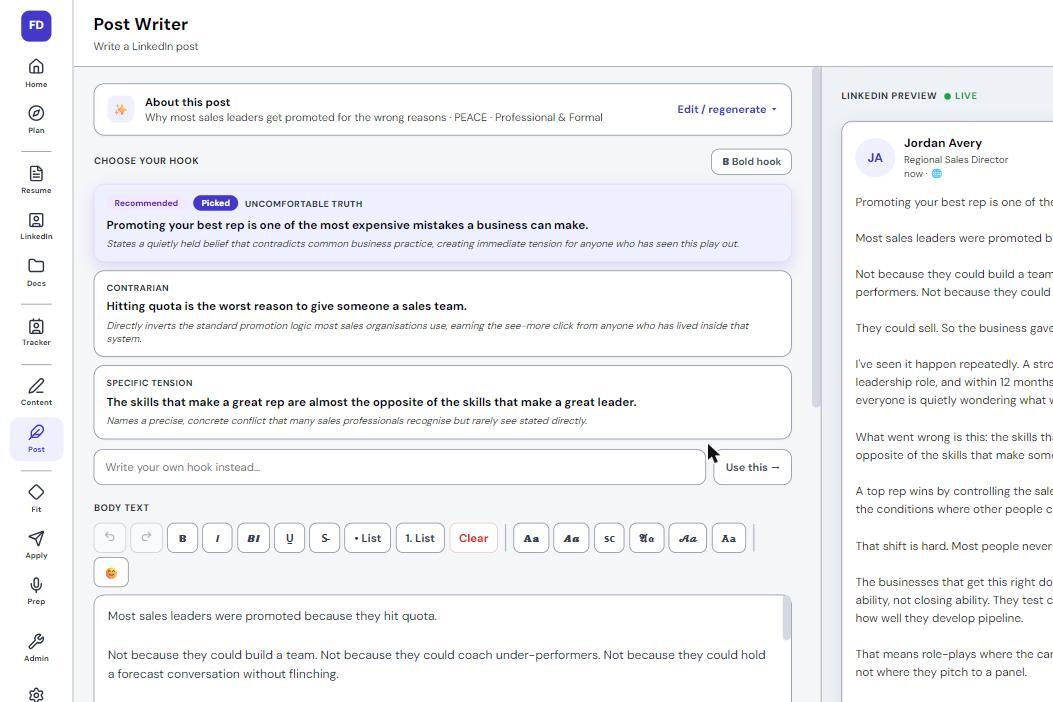
Inside FutureDay: How the Content Plan, Calendar and Post Writer Work Together
Four named pillars become twelve fully drafted LinkedIn posts, scheduled to the days you'll actually keep, then checked for AI signal before anything goes live.