Nudges is FutureDay's daily follow-up engine. Instead of a wall of open tasks, it picks one real thing to do next, offers to draft the message for you, then goes quiet until the next one is genuinely due. Every nudge traces back to something you actually entered, a task, a follow-up date, a stage that's gone stale, so nothing gets invented and nothing quietly goes cold.
Why do opportunities actually die in a job search?
The book behind FutureDay puts it plainly: "Most opportunities are not lost to a 'no.' They are lost to silence, yours, because no one was keeping the opportunity alive." Chapter 7 names five habits that separate people who stay in motion from people who stall: track every opportunity through its stages, always have a next action, follow up because almost no one does, keep several things alive at once, and treat rejection as information rather than a stop sign.
None of that is a secret. Most people would agree with all five habits if you read them out loud. The gap isn't understanding them. It's sustaining them, week after week, across every contact and every role at once, while also doing the actual work of interviewing and applying.
What does that silence cost you?
It rarely looks dramatic. A recruiter sends screening feedback and it sits unread for five days because the week got busy. A hiring manager takes a genuinely good first call and nobody sends the note that keeps the door open, so the conversation cools on its own with no rejection ever spoken. A contact who offered to introduce you to someone gets a thank-you and then silence, because the follow-up never made it onto anything you'd actually look at again.
None of these are refusals. They're just threads nobody was holding. Multiply that across a real search, dozens of contacts at different stages, several live opportunities, a handful of tasks tied to each one, and the number of threads quietly going cold adds up faster than it feels like it should.
Why can't you just keep a list and remember?
Because you're not tracking one relationship. You're tracking a whole pipeline at once, each piece moving at its own pace. A spreadsheet can hold that information, but it can't tap you on the shoulder when a follow-up date arrives, and a sticky note doesn't know the difference between something that can wait and something that's already five days overdue. The habit the book asks for, always have a next action, is easy to write down and hard to run manually once real life is also happening.
How Nudges keeps everything warm without becoming noise
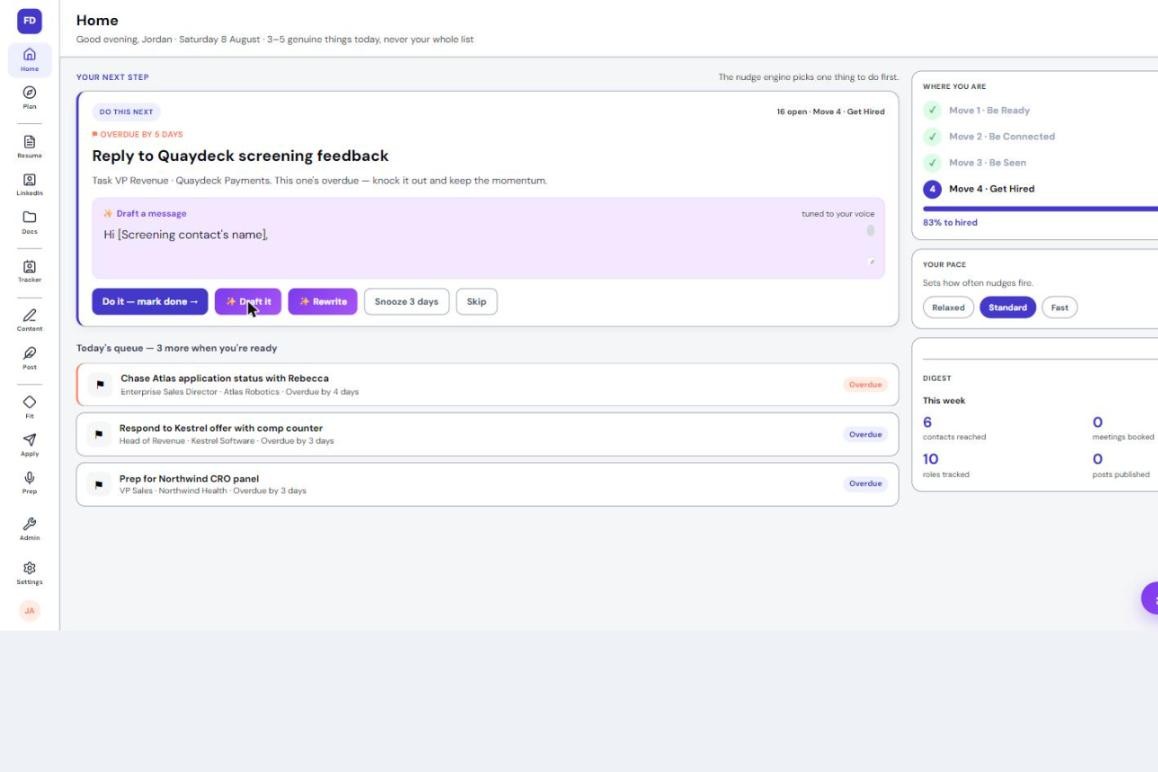
The engine sits on the Home screen under a simple label: "The nudge engine picks one thing to do first." In a real account, that one thing was a task tied to an actual opportunity: "Reply to Quaydeck screening feedback," flagged overdue by five days, with the context underneath it, VP Revenue role, Quaydeck Payments, this one's overdue, knock it out and keep the momentum. Not a generic reminder. A specific thread, named, with a reason to act on it now.
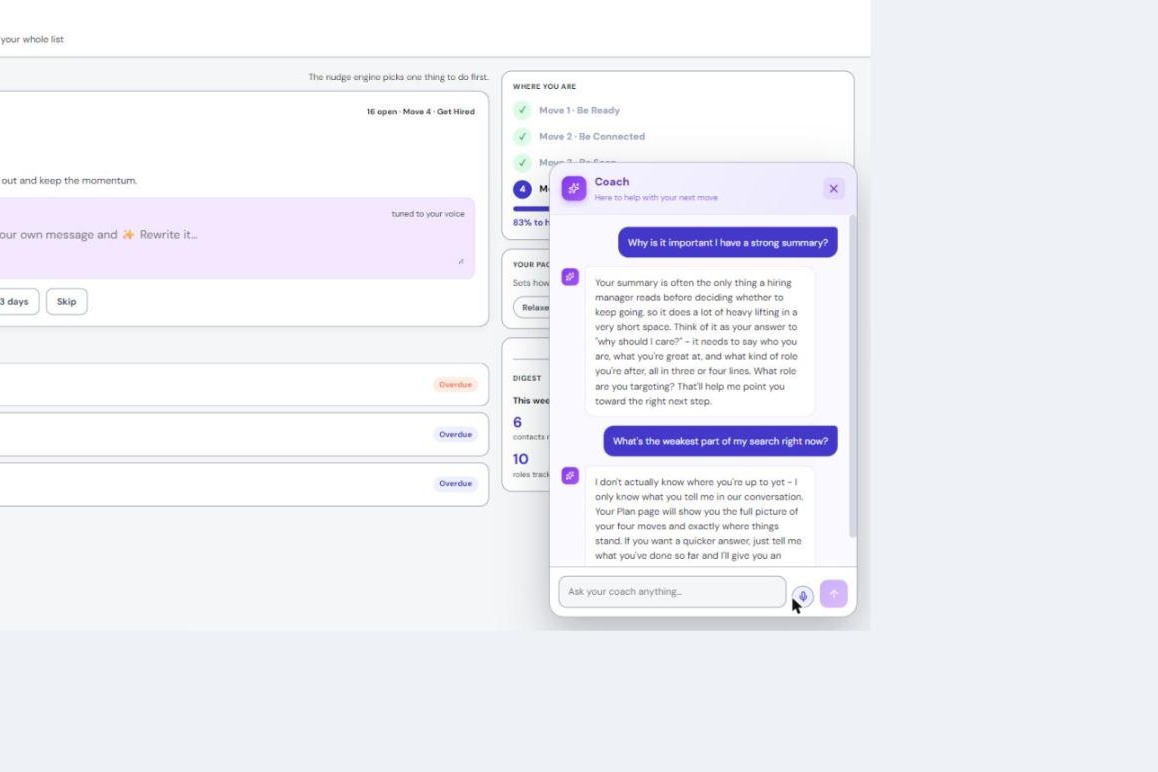
From there you get real choices, not just a checkbox. Do it, mark done. Draft it, which writes a message tuned to your own voice, ready to personalize before it goes anywhere. Snooze three days, or skip. Asked to draft that Quaydeck reply, the system returned a genuine first-person draft addressed to "[Interviewer name]," thanking them for the feedback and asking whether there was a chance to discuss the VP Revenue role further, along with three plain notes underneath it: fill in the actual name, add anything specific from their feedback if you want it to feel personal, and drop the closing line entirely if the rejection is final. Nothing gets sent on its own. The draft is yours to edit or ignore.
Underneath that one card sits a queue, deliberately capped rather than dumped on you all at once, today's queue, three more when you're ready. The page's own framing is direct about this: three to five genuine things today, never your whole list. A pace toggle, Relaxed, Standard or Fast, sets how often nudges fire in the first place, so the system matches how hard you're actually pushing rather than running on a fixed clock regardless of your week.
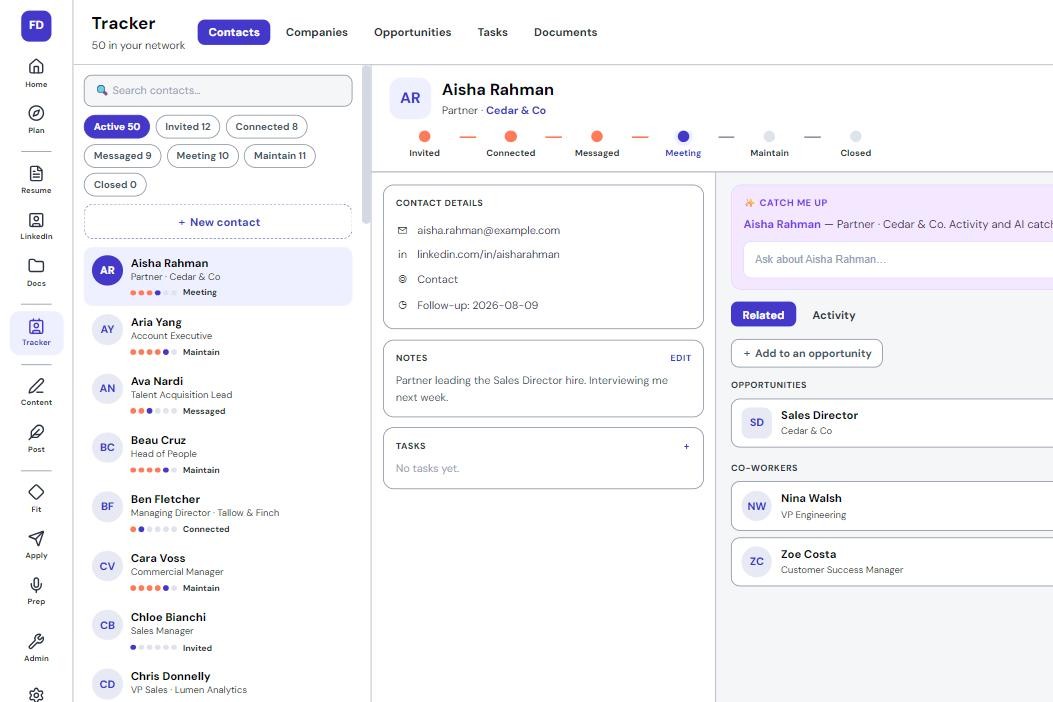
Every nudge is grounded in something real underneath it. Contacts move through a named pipeline, Invited, Connected, Messaged, Meeting, Maintain, Closed, and opportunities move through their own, Saved, Applied, Screening, Interviewing, Offer. A nudge fires because a stage has sat still past its normal window, or a date you set yourself has arrived, never because the system decided to invent a reason to interrupt you.
Before: Sixteen open threads living in your head, a screening reply going quiet for five days, a promising first call cooling with no follow-up because nobody was watching the date.
After: One card each morning, a reply already drafted and ready to personalize, the other fifteen resting quietly until their own moment actually comes due.
What changes once nothing goes quiet on its own?
Staying on the front foot stops being a discipline you have to remember and becomes the default behavior running underneath your search. A weekly digest shows the shape of it in plain numbers, six contacts reached, two opportunities moved forward, ten roles tracked, the kind of quiet momentum that's easy to lose sight of when you're only looking at whatever's stressing you out that day. Every open thread has an owner and a date. The silence the book calls the real opportunity-killer stops being silence, because something is finally keeping track of when you'd otherwise forget.
Most opportunities aren't lost to rejection. They're lost to silence, an unread reply, a call that cools, a thank-you never followed up.
Nudges surfaces one real, dated action at a time from your actual pipeline, then goes quiet until the next one is genuinely due.
Draft it writes a message in your voice from that specific thread, ready to personalize, never sent without you.
A capped daily queue and a pace toggle keep it to a handful of genuine things, never a wall of tasks.
You were never going to remember every open thread by willpower alone. You just needed something that would.