A chatbot is a good writing tool, and plenty of job seekers use one well. But it writes what you ask for, so you have to already know what good looks like. It will polish your resume forever without ever saying the resume was not the problem. And it only knows what you tell it. The gap is not the writing. It is everything around it.
Using ChatGPT for your job search is sensible. It is fast, it is cheap, and it writes a cleaner first draft than most people manage at eleven at night. The question is not whether to use one. It is what it can and cannot carry, because a job search has a lot of parts that are not writing, and those are the parts that decide how long it takes.
What is a chatbot genuinely good at here?
Quite a lot. Turning a messy list of duties into clear sentences. Tightening a cover letter that runs to two pages. Suggesting interview questions for a role and letting you practise answers out loud. Explaining an industry term you have not met before. Giving you five versions of an awkward message so you can pick the least awkward.
If you already know what you want and just need it written well, a chatbot is a real help. Most of its limits in a job search are not about the quality of its writing at all.
Why does it never tell you the resume was not the problem?
Because you did not ask. Ask a chatbot to improve your resume and it will, every single time. It will find a stronger verb, a tighter line, a better order. What it will not do, unless you already suspect it, is step back and say: your resume is fine, the problem is that you are only applying through job boards.
That is the most common reason a search stalls, and it is invisible from inside the document. Across 38 million applications, Ashby found that 40 percent of referred applicants got an interview, against 3 percent of people who applied cold. No amount of polishing turns a cold application into a referred one. A tool that only answers the question you asked cannot tell you that you are asking the wrong one.
Before: "Make my resume more impactful." Twenty minutes later, a sharper resume. It goes into the same job board queue as last week's version, and gets the same silence.
After: "Here is my resume, and here are the last thirty roles I applied for with the results. What is going wrong?" A better answer, but only because you already knew to ask it.
What does it cost you to be your own editor?
Time, mostly, and it adds up. A chatbot's output is only as good as your judgement of it, so every draft needs you to decide whether it is right. Is this resume line the one a recruiter wants to see? Is this message too formal for someone you worked with for six years? Is this cover letter saying anything a hundred other applicants did not say?
If you have hired people, written resumes for a living, or coached others through a search, you can make those calls quickly. Most people cannot, and there is no shame in that. So they go round the loop: generate, doubt, regenerate, doubt again. A standard you can check against saves more time than a faster writer does.
There is also the sameness problem. Hiring managers now read a lot of chatbot writing, and it has a sound: fluent, polished, and oddly empty. Unless you feed it your own voice and real detail, it gives you the same safe tone it gives everyone else.
What does it not know about your search?
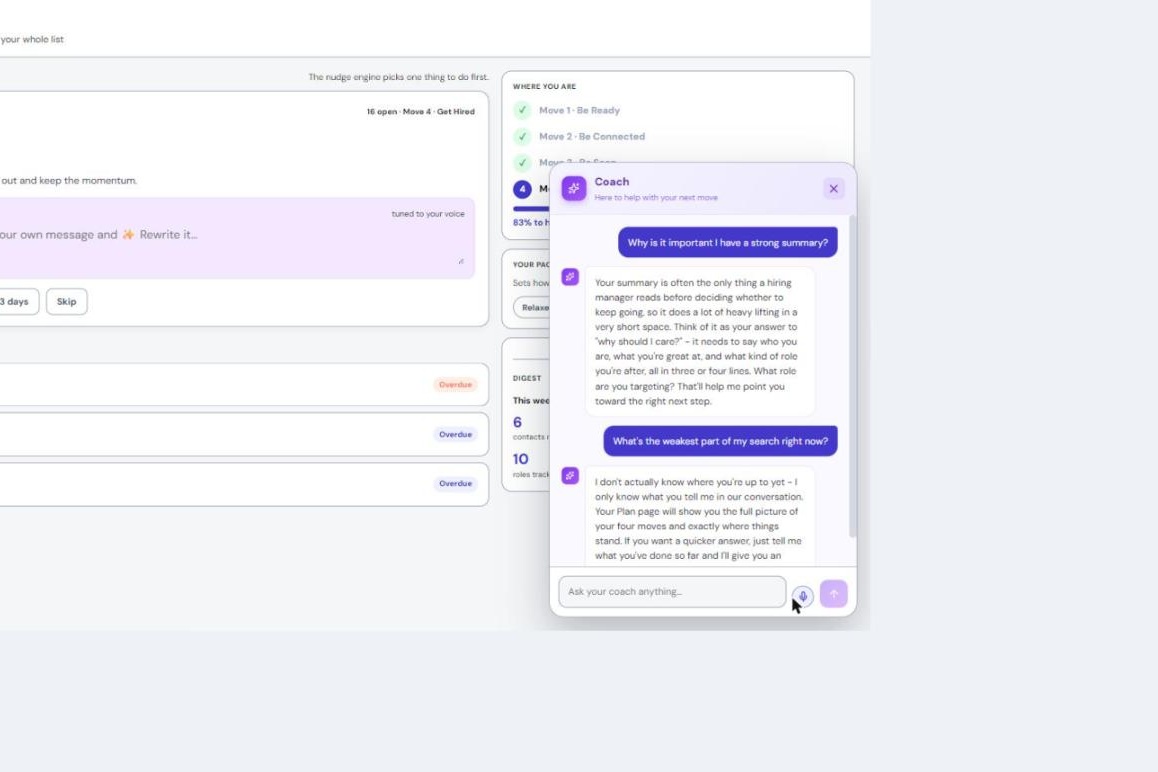
Almost everything. A chatbot does not know you messaged a former manager nine days ago and never heard back. It does not know which of your fifteen contacts is due a follow-up this week. It does not know that the role you applied for on Monday is at a company where your old colleague now works. It only knows what you tell it, so keeping track of who you contacted, who replied and who is due is still your job.
And a job search is mostly that kind of work: remembering, following up, choosing the next person, noticing what has gone quiet. The writing is the easy part to hand off. The keeping track is the part that stalls people, and a blank chat window does not hold it.
What has to sit around it to make it work?
Three things, whether you build them yourself or use something that provides them.
A standard. A written view of what a good resume line, LinkedIn profile or outreach message looks like, so you can judge what the chatbot gives you instead of guessing.
A memory. One place that holds every contact, company and role, with the date of the last touch and what is due next.
A next step. Something that looks at all of that each day and tells you the one or two things that matter today, so the writing tool is pointed at the right job.
A chatbot can be part of that. It just cannot be all of it.
Where FutureDay fits
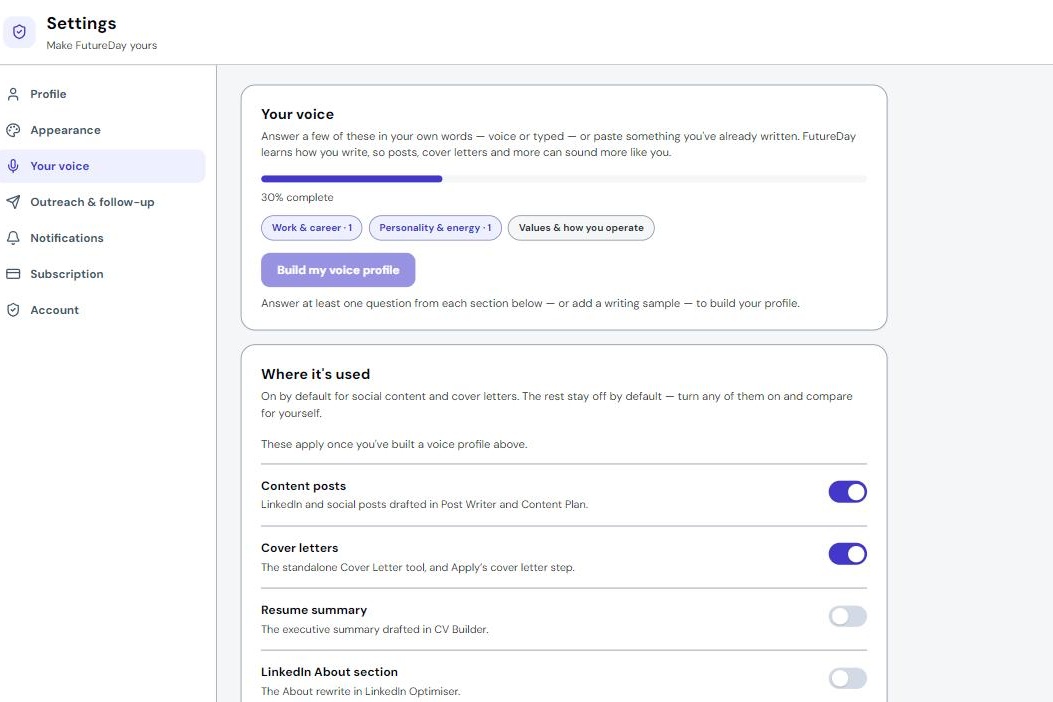
FutureDay uses AI for the writing too, but it's built around the rest of the search: who to contact, what to say and what to do next. Each morning Home puts one next step and a short queue in front of you, each message ready to copy, and you send it yourself.
A chatbot is a genuinely useful writing tool for a job search, if you already know what good looks like.
It answers the question you ask, so it will polish a resume forever and never say the resume was not the problem.
It only knows what you tell it, so your pipeline, your contacts and what went quiet last week are still yours to track.
To make it work you need a standard to judge against, one place that remembers everything, and a clear next step each day.
 21 pages, a 15-minute read